Translate

Sunday, November 10, 2013

DENMARK-Our Danish Christmas Dinner is Complete plus Fun Facts!


We really enjoyed learning about Denmark this week. The girls loved our traditional Danish Christmas Dinner. Our favorite dish was definitely the Roast Pork! I cannot wait to travel there some day, it looks so beautiful! Here are some fun facts we learned about Denmark this week:

1.   The world famous building toys Lego are from Denmark.
 
2. The average tax rate in Denmark is 49%.
 
3. Danes eat more pasta than any other people.

4. There is not a single mountain in Denmark.
 
 5.  According to the WHO (2002 stats), Danes have the lowest incidence of obesity in the    EU.
 6. Danish men marry the oldest of all Europeans - at 32 years old in average.
      
 7. The flag of Denmark, Dannebrog, is the oldest state flag in the world still in use by an independent nation. It was adopted in 1219.  

8. There are 443 named Islands in Denmark, 76 of which are inhabited.
 
9. Denmark has the highest employment rate in Europe(75%).
 
10. The World Audit ranks Denmark as the world's most democratic and least corrupted country in 2008.


Sources: http://www.eupedia.com/denmark/trivia.shtml, http://www.10-facts-about.com/Denmark/id/31
 

Saturday, November 9, 2013

Denmark-Menu is Set! Plus Traditional Danish Folk Dance

Thank you to my dear friend and native of Denmark, Ninnetta, for sharing with us this traditional Danish Christmas Menu. Tonight we will be cooking Flæskesteg which is a  Danish Christmas roast pork along with Brunkartofler - Caramelized potatoes, and red cabbage. I can't wait to get cooking!


Flaesketeg-Danish Christmas Roast


This is the classic Christmas meal in Denmark. This recipe serves four people, at least.

Ingredients:

- 4 lbs loin of pork with the skin on, and scored all the way down to just before the flesh in lines 1inch apart (ask the butcher to do this if necessary)

- 1 carrot

- 1 onion

- 1 or 2 bay leaves
-1 cup boiling water

- few sprigs of thyme

Method:

- Preheat your oven to 425 degrees Fahrenheit.

- Place the pork joint skin side down (yes, ‘upside-down’) into a roasting tray. Add just enough boiling water to the tray so that the skin is submerged. 

- Put the pork in the oven for 20 minutes.

- Use a clean tea towel to hold the pork in the roasting tray so you don’t burn yourself while you carefully pour away the water.

- Turn the oven down to 350, then flip the pork over so it’s the right way up (skin up), and coat the skin with a generous amount of salt and pepper, making sure you get into the crevices created by the scoring. Be careful of your hands at this point, the pork will be hot! Stick the bay leaves into the crevices as well, then add the carrot, onion and thyme to the roasting tin, and pour 1 cup fresh, cold water in.

- Put the pork back in the oven for about an hour or until it is done. Check about halfway through to see if you need to top up the water if it’s starting to evaporate too much.


- Increase the oven temperature back up to 425 and put the roast pork back in to make the crackling. This can take a good 15 minutes, so use the grill if you want to kick start the process (but keep a close eye on it, or else you could end up with a burnt crackling).

- Let the roast rest uncovered for about 10 minutes. While that’s happening, make the gravy from the fat and stock - use gravy browning if required.

Brunkartofler - Caramelized potatoes

A traditional accompaniment to Danish roast pork.  It's a bit sweet so we only eat these once a year.

Ingredients:

- 1 cup sugar

- 1/2 cup butter

- 1lbpeeled and cooked small new potatoes - must be COLD.

Method:

- Add the sugar to a cold frying pan and spread it evenly across the bottom. Melt it on a high heat while you stir for about 2 minutes, then turn the heat down to medium while you add the butter. Turn up the heat to high again.

- Put the potatoes in a colander or sieve and run them under a cold tap, then add to the pan. As you can imagine, it’s going to splutter and spit a bit, so be careful.

- Get the potatoes covered in caramel and brown them for between 4-6 minutes, turning them carefully. If it looks like they’re getting a bit too dry, add a drop of water (again, take care doing this).

- Serve the caramelized potatoes along with normal boiled potatoes - as these are very sweet, they’re more of an extra side dish for the pork rather than a replacement for potatoes altogether.

NOTE: Always use potatoes that are completely cold. If you’re preparing them yourself, peel and cook them the day before.

Makes servings USMetricAdjust Recipe (HelpRed Cabbage)


Red Cabbage

·      1 (2 pound) red cabbage

·     2tablespoonbutter                                                                                                                                       
 
 1/4 cup distilled white vinegar

1 cup cranberry juice

·     2 tablespoons sugar, or more to taste

·     salt to taste

 
Directions

1.     Remove the outer set of leaves of cabbage and discard. Cut cabbage quarters; remove and discard white stem. Chop remaining cabbage finely.
2.     Melt butter in a pot over medium heat. Cook and stir cabbage in melted butter until softened slightly, 2 to 3 minutes. Pour vinegar over cabbage and stir to coat. Add cranberry juice and sugar to the pot. Season cabbage mixture with salt.
3.     Reduce heat to low, place a cover on the pot, and cook, stirring occasionally, until the cabbage is completely tender, 60 to 75 minutes. Add more sugar towards the end if it is tart.


Thursday, November 7, 2013

DENMARK-Let's Discover the Happiest Country in the World!

 
This week we are studying Denmark. A country I would love to visit one day, but know very  little about. The word ‘Denmark’ dates back to the Viking age and is carved on the famous Jelling Stone from around 900 AD. Today though Denmark is very different from its historical past. Between the 13th and 17th centuries, Denmark was a superpower whose influence was as powerful as that of the largest European countries. Today, the current size and influence of Denmark is the result of 400 years of forced relinquishments of land, surrenders and lost battles. For a small country though, Denmark still shines  in many different areas including design, architecture, farming, green technology and pharmaceuticals.


 Happy Country

Did you know that Denmark has once again been ranked as the happiest nation in the world, this time by the 2013 World Happiness Report? This survey normally asks people to evaluate their lives. Research show what makes the Danes so happy is that they are very trusting of other people they don’t know. Trust helps make people happy. Also just as importantly, Danes feel empowered to be able to change something in their life if they don’t like it. I love that. Another aspect of Danish happiness is their outlook on society.  Professor Erik Sorenson stated, “The great thing about Danish society is that it doesn’t judge other people’s lives. It allows them to choose the kind of life they want to live, which is sometimes not always possible in other countries, so this helps add to the overall satisfaction of people living here,” he adds. It also seems the Danes attitude to money is refreshingly different from other countries. “Money is not as important in the social life here, as for example Britain and America. We probably spend our money differently here. We don’t buy big houses or big cars, we like to spend our money on socializing with others,” concludes the Professor. This is something I completely agree with!

 Cultural traditions
Denmark celebrates many traditions and festivals throughout the year. Many Danish traditions are based around the Christian calendar, with Christmas, Easter and St. John’s Eve  being some of the most important and typically spent together with family. Here are a few we learned about this week.
 
Shrovetide
Shrovetide is a children’s festival, they dress up – usually on Quinquagesima Sunday – and go around with their collection tins which they try to get filled with money.
Easter
Many homes and shops are decorated for Easter in green and yellow, especially with new-leaved branches and daffodils. The main symbol of Easter is still the egg.
Great Prayer Day
Great Prayer Day is a special Danish festival falling on the fourth Friday after Easter Sunday, i.e. at the earliest on 17 April and at the latest on 21 May. 
 
May 5 - Denmark's Liberation
After having been occupied by Germany since 9 April 1940, Denmark became free again on 5 May 1945. When the liberation was announced in the 8.30pm BBC broadcast on  May 4,  1945, many Danes spontaneously placed lit candles in their windows. This became a custom that is still kept up by many Danes.
Pentecost/Whitsun
Pentecost is a Church festival celebrated to mark the advent of the Holy Spirit and the founding of the Church. The Christian Pentecost is also associated with the awakening of nature at Whitsun. It falls 50 days after Easter, i.e. at the earliest on May 11 and at the latest on  June 14.
June 5 - Constitution Day
 June 5  is the anniversary of the coming in force of the first Danish Constitution, the June Constitution of 1849. The day, which in many places is a full or half holiday, is celebrated around the country with political rallies, which especially formerly were in the nature of popular festivals, for instance on the popular nature spots Himmelbjerget and Skamlingsbanken in Jutland. It is also Father’s Day, which was introduced from the USA in 1935.
June 15 - Valdemar's Day
According to the legend, the Danish flag, Dannebrog, on this day fell from the sky by Lyndanise in Estonia, where King Valdemar II the Victorious was crusading in 1219. Since 1913, the day has been a national flag day when little Danish flags are sold. Until 1948, the day was a school holiday and it was celebrated with Valdemar Festivals around the country.
November - All Saint's Day
All Saints’ Day, which is celebrated on the first Sunday in November, was originally a commemoration day for the dead saints held on 1 November. The day survived the Reformation, but the Protestants combined it with All Souls’ Day, which was on  November 2. The day was abolished as a church festival in 1770, but is celebrated by the church on the first Sunday in November. In recent years, it has become common in many churches to commemorate those dead during the year on the day itself. The tradition of placing candles on the graves the evening before All Saints’ Eve is becoming more common. So is the American Halloween where the children dress up as ghosts etc. and go around ringing door bells like at Shrovetide. When the door is opened, they say ‘trick or treat’ (in English). If they are not given a cookie or money, they make trouble – like at Shrovetide.
November 10 - Martinmas Eve
Martinmas Eve is the evening before St Martin’s Day. Many Danes eat roast duck or goose on this evening. According to the legend, Martin was revealed by some geese when he modestly hid to avoid becoming a bishop. He therefore decided that every year on this day, November 11, the geese must lose their lives to be eaten.
December - The Christmas Month
The whole month of December is dominated by Christmas. In most towns, the main shopping streets are decorated with fir garlands and lights. In squares and gardens, there are Christmas trees with fairy lights, a custom dating back to 1914, when the first Christmas tree was lit on the Town Hall Square in Copenhagen. In recent years, it has also become common to cover many other trees or objects with fairy lights.
December 31 - New Year
Unlike Christmas, which most people spend with their family, New Year is celebrated with the friends. New Year’s Eve is framed by two important items broadcast on television and radio, viz. respectively the monarch’s New Year Speech at 6pm and the striking of midnight by the Town Hall Clock in Copenhagen, which marks the start of the new year.
The monarch’s New Year Speech has virtually become a national rallying point since it was first made in 1942 during the German Occupation, when the King called for national unity.
Many Danes party with various kinds of good food followed by champagne and marzipan ring cake at midnight. The New Year is greeted with fireworks after midnight; they include both noisy bangs and rockets, etc. which light up the night sky in many different colors. In many parts of the country, the traditional New Year’s Eve menu is boiled cod, referred to as New Year’s cod, or stewed kale and cured saddle of pork. 
 
Social Welfare
The basic principle of the Danish welfare system, often referred to as the Scandinavian welfare model, is that all citizens have equal rights to social security. Within the Danish welfare system, a number of services are available to citizens, free of charge. This means that for instance the Danish health and educational systems are free. The Danish welfare model is subsidized by the state, and as a result Denmark has one of the highest taxation levels in the world.


Education for all
High quality education at all levels is essential to ensure competitiveness in today’s globalized world. This is why education is a key priority in Denmark. With their high academic standards combined with innovative learning approaches, the Danish institutions are preparing their students to play an active role in a globalized, knowledge based society.
Denmark is well known for having the highest taxes in the world and one of the highest standards of living in Western Europe. It is also one of the most egalitarian countries in the world, while each year the Danes give 0.8% of their Gross National Income to foreign aid.
 

Family
Denmark has very generous maternity leave for both parents. Children born in 2011 were happy to see that their parents stayed at home to look after them for 311 days after their birth. The mothers accounted for the greater part with 295 days, while the fathers had 36 days. Now this is definitely something we could learn from the Danes!


Saturday, November 2, 2013

CROATIA-Dinner is ready plus Fun Facts!


We really enjoyed making our Croatian dinner this evening. The Roasted chicken with Lemons was absolutely succulent and juicy. The citrus provided a very fresh and light note to the savory chicken.
 
 
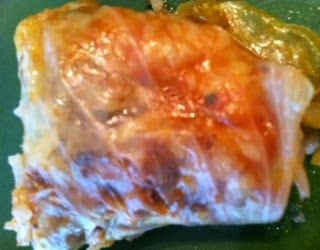
 The girls loved scooping out the meat, rice, and onion filling and rolling up the cabbage leaves. We served them with mashed potatoes and sour cream. They were savory and delicious! Thank you again Maria for generously sharing this recipe with us!


Here are some interesting facts about Croatia we really found really neat!

1. The first tie came from Croatia and today it is worn daily by 600 million men around the world. The cravat or tie has been a part of the Croatian national costume from ancient times. According to Croatian tradition, before a soldier set off for war, his girlfriend or wife would give him a narrow scarf to wear around his neck to remind him of her love. Its modern variety originated in the 1630’s, when Croatian mercenaries enlisted as a support to the reigning king Louis XIII and Cardinal Richelieu came to France. One particular detail of their military attire caught the Parisian attention. It was an unusual scarf knotted at their necks. The French readily accepted the new fashion and switched from ruffs to the new loose cravats under the shirt collar. The word cravat itself actually reveals its Croatian origin, since the French version cravat derives from the mispronunciation of the word Croat.


2. The famous Dalmatian dogs originally came from Croatia. Thanks to its eye catching white coat and black spots, the Dalmatian is one of the most easily recognizable dog breeds in the world. The breed takes its name from Croatia's region of Dalmatia, where it is supposed to have originated.

3. Croatia is the homeland of the world renowned traveler Marco Polo. 13th century explorer is known as one of the first Westerners to travel the Silk Road to China and visit the Mongol Empire. The journey took 24 years, he passed some 25,000 km - became a confidant of Kublai Khan, and he served 17 years. According to a local tradition, he was born on the island of Korčula in 1254 to a family of merchants. The surname is still found on the island.

4. The White House was built of Croatian stone, from the island of Brač, as well as the New Palace (Vienna, Austria), the Parliament building (in Vienna, Austria), the Parliament Building (Budapest, Hungary) and the palace of Roman emperor Diocletian (Split, Croatia).


5. There is a world rarity in the Archeological museum in Zagreb, the Zagreb mummy. Nesi-hensu, the wife of Aher-hensu, „the divine tailor" from Thebes, is the name of a mummified woman who was wrapped in cut ribbons of Zagreb linen book which represents the longest preserved text in Etruscan language and the only preserved sample of linen book in the entire Ancient world.


6. The city of Zadar is home to the world's first Sea Organ that creates its music only by the action of the wind and waves.

7. The oldest communal theatre in Europe was built in Hvar in the year 1612.
 

8. First hydro power plant in the world was "Iskrice", made in the city of Šibenik, on the river Krka, Croatia - 1895.


Friday, November 1, 2013

CROATIA-Cultural Traditions and Menu with Recipes shared by Maria Hrabric


Thank you to my dear friend, Maria Hrabric for sharing these wonderful Cultural traditions and recipes from Croatia with us!

"Ok - my two favorite Croatian traditions. One is November 1st - All Soul's Day where everyone (and I do mean everyone) goes to the graveyard with candles and flowers and visits with their family members that have passed. Thousands upon thousands of candles are lit and burn into the next day. I celebrate it here in the US, by lighting candles and thinking about my ancestors - thanking them for the life they've given that led to me being here and where I am.
My second is Dec 6th - St. Nicholas Day. We put our shoes by the front door and St. Nick brings candy, fruit, or coal and sticks depending if you've been good or bad."


For this week's menu we will cook two traditional Croatian dishes courtesy of Maria Hrabric. The main course is called Sarma, which is stuffed Cabbage with Meat, Rice, Onion, and herbs. For dessert we will bake Orehnjaca. I have had this at Maria and Petra's house many years ago and still fondly remember it today. It was so delicious! Cannot wait to cook tomorrow:)


Food: Sarma(Stuffed Cabbage Rolls)

1 sour cabbage head
1 lb ground beef
1 lb ground pork
1 C white rice
1 medium onion (chopped)
parsley (I add a couple cloves of garlic - chopped)
Mix the meat, rice, onion, parsley and garlic. Roll into small round balls or ovals Lay onto a leaf of cabbage (near the stem) and roll up, tucking in the sides Continue till all meat is gone
Take 2-4 links of smoked sausage (real kind - not polish kielbasa) and cut into pieces. Lay cabbage rolls at the  bottom of a stock pan till covered, layer with sausage, and alternate until all is in the pot. Add water to just cover and put on medium heat for a few hours until done. Serve with mashed potatoes.


Dessert: Orehnjaca (Poppy Seed Walnut Nut Roll)

Bread:
Crumble 2 cakes of yeast into 1/2 Cup warm milk and 1 Cup warm water. Add 2 Cups flour and mix. Let rise to twice its original size (approx. 1/2 hour). Add 1/2 lb butter (2 sticks), 6 egg yolks, 1/2 Cup sugar, 1/4 Cup sour cream, 1 tsp. salt, 1/2 of a lemon's juice, 3 Cups flour or more as needed. Separate into four balls.

Filling:
Poppy seed: Take cans of poppy seed filling and add 1 Cup honey, mix.
Walnut: 1/2 lb finely chopped nuts 1 Cup milk 1/2 C sugar or honey, 4 egg whites, dash of cinnamon and nutmeg.
Roll out a dough ball, spread filling over bread, roll the bread tightly. Brush with egg white mixture and bake at 350 degrees for about an hour.


 We are also going to cook a traditional Croatian Grilled Chicken with Lemons. I found this recipe in a Croatian Food Blog. Here is the link to the recipe.

 http://www.cooks.com/recipe/a96b392v/croatian-chicken-with-sour-cream.html