Argentina Armenia Basque Brazil China Croatia Denmark Djibouti Egypt Ethiopia Finland France Germany Greece Hawaii Hungary India Ireland Italy Japan Jordan Kenya Korea Lebanon Luxembourg Mexico Morocco Netherlands Norway Oman Poland Portugal Qatar Quebec Romania Russia Spain Sri Lanka Sweden Tahiti Thailand Turkey United Kingdom United States Uruguay Venezuela Vietnam Wales West Bank Yemen Zambia Zimbabwe
Translate
Friday, December 13, 2013
FINLAND-Menu is Set!
This week we will be cooking a hearty soup called Lohikeitta. Lohikeitta is a traditional Finnish dish comprised of Salmon, Potatoes, Onions, Cream, Butter and Dill. It is usually accompanied by another Finnish staple, Ruisleipa, Finnish Black Rye Bread. We will add a Rhubarb compote to our Ruisleipa which is often eaten as a breakfast treat in Finland. I cannot wait!!!!
Sources: http://www.alternativefinland.com/finnish-salmon-soup-lohikeitto/, http://finnishfoodgirl.com/2013/05/finnish-rye-bread-ruisleipa/
FINLAND-Land of Suomi
This week we are heading far north to Finland! Situated in the Fennoscandian Region of Northern Europe, Finland is a Nordic Country with a very interesting culture. Finland has only been an independent country since 1918. Before that it belonged to Russia or Sweden. It is bordered by Sweden, Norway, Russia, and Estonia to the south across the Gulf of Finland. Finland along with Iceland is Nordic rather than Scandinavian. This is reflected in their language which is not Germanic in origin. While many social values are the same, there are subtle differences with Scandinavians.
5.4 million people live in Finland with the majority
concentrated in its southern regions. In terms of area, it is the eighth largest country in Europe
and the most sparsely
populated country in the European
Union.
Finland is a country of thousands of lakes and
islands—about 188,000 lakes and 179,000 islands. Its largest lake, Saimaa, is the
fourth largest in Europe. The area with most lakes is called Finnish
Lakeland. The greatest concentration of islands is found in the southwest
in the Archipelago Sea between continental Finland and
the main island of Åland.
Ninety-eight percent of the Finnish population
speak Finnish. However, it was not until the publication of the Kalevala in
1836, a book of folk poetry, that Finnish became the official language of the
country. Swedish is the second official language and is the mother tongue of
about 6 percent of the population. In school, Finnish children learn both
Swedish and Finnish and may also learn Russian, German or English. English is
the most popular foreign language in the country, so you can get around Finland
without speaking Finnish or Swedish. Finnish, unlike Scandinavian
languages, is not Germanic but in a class of its own. It belongs to the Uralic
family of languages. Theoretically, it is related to Hungarian but in practice
the two are not mutually comprehensible.
Finns have a word to describe themselves called
"sisu," which roughly translates to a combination of courage,
strength and determination. They are fond of technology; the Finns are leaders
in Internet usage and have more mobile phones than landline phones.
The Finnish word for their country is
"Suomi," which means marshland. Even though Finland has many lakes, less than 8 percent of the country is arable. This means crops are
limited. Potatoes and grains are staple crops, including wheat, barley and
oats. Flax is grown for food and for creating textiles such as rugs and
curtains.

Traditional breads are a part of every meal in
Finland. In western Finland the bread is ruisleip, a sour rye bread that is
flat and crispy and has a hole in the middle. In eastern Finland the bread is
round and thick. Fish is also a staple, with varieties such as salmon,
whitefish and herring. Finns usually serve boiled potatoes with fish. Common
meats include smoked ham or smoked reindeer.
Taking a sauna is one of the most popular pastimes
in Finland; there are about 2 million saunas in Finland for less than 6 million
people.
It is an experience shared with family
and friends. Important business meetings may be followed by a sauna in which the
conversation is continued on a more informal basis.
International sauna championships are held each year to see who can
last the longest in the hottest temperatures. Winter sports such as Nordic
skiing and downhill skiing are popular as well. More unusual pastimes for Finns
include competing in sports such as wife-carrying and mosquito-killing.
Some famous Finns in History are famed composer Jean Sibelius, Tarja Halonen-the First Female President of Finland, and notable author Johan Ludwig Runeberg.
A unique tradition of Finland is the tradition of celebrating Juhannus, the Finnish Midsummer. A majority of Finns retreat to summer cottages (mökki) on any one of Finland's numerous lakes. Depending on the region, a bonfire at midnight celebrates the summer solstice, and in the Åland Islands, the Swedish-originated tradition of dancing around the Maypole is observed. The midsummer traditions also include different versions of pairing magic and folklore in the festivities.
Sources: http://traveltips.usatoday.com/food-culture-finland-16053.htm,
Saturday, December 7, 2013
ETHIOPIA-Fun Facts
Ethiopia is a very unique country with an amazing history that goes back several thousand years. There was so much I did not know about this wonderful place. Here are some of our favorite facts we learned about enchanting Ethiopia!
- Ethiopia is the only African country with its own
alphabet.
- Time in Ethiopia is counted on the opposite side of the
clock (6:00 is at our 12:00).
-Ethiopia is the original
birthplace of coffee. It was discovered in the region of Kaffa. Ethiopia is the
world’s seventh largest producer of coffee today, and Africa’s top
producer.
-People in Ethiopia
generally speak Amharic, which is a Semitic language like Arabic and is
considered a sacred language to Rastafarians.
-Ethiopia
claims to hold the Ark of the Covenant as well as a piece of the True Cross on
which Jesus was crucified.
-Ethiopia
is known as the Cradle of Mankind, with some of the earliest ancestors found
buried in the soil. Lucy (3.5 million years old), the most famous fossils
found, were unearthed in Hadar.
-Ethiopia
remains one of the only nations in Africa never to be colonized. It was
occupied briefly by the Italians from 1936 to 1941.
-Ethiopia
is home to 9 UNESCO World Heritage sites, more than any other country in Africa.
-There are
more than 80 different ethnic groups in Ethiopia with just as many languages
and over 200 dialects are spoken throughout the country.
-Teff, the grain used to make the Ethiopian staple injera, is an ancient grain believed to have originated
in Ethiopia between 4000BC and 1000BC. It is the smallest grain in the
world and is rich in calcium, phosphorous, iron, copper, aluminum, barium, thiamine,
and is a good source of protein, amino acids, carbohydrates and fiber. It
is a great gluten-free option.
-There are 13 months in the Ethiopian calendar
- Traditionally, parents and children do not share a last name. Most children take their father’s first name as their last name.
ETHIOPIA-Dinner is Ready! Ethiopian Tibs, Gomen Wot(Collard Greens), and Carrots with Cabbage
This week was so much fun learning about Ethiopia. It was very difficult trying to decide on a regional dish. With all the glorious wots to choose from we decided to cook traditional
Ethiopian Tibs(Lamb Stew), Gomen Wot(Ethiopian Collard Greens), and Ethiopian Carrots with Cabbage. They were delicious! We combined everything into one bowl and enjoyed them family style. The wonderful blend of cardamom, turmeric, and clove in the lamb was a symphony of aromas. I was surprised to learn that red wine paired so well with such bold spices. I love collard greens and never used turmeric, paprika, or allspice to prepare them. They were outstanding. We will definitely cook these dishes again!
From famed Ethiopian born Swedish raised Chef Marcus Samuelsson,
here is a recipe for Ethiopian Tibs(Lamb Stew):
2 lbs loin lamb,
boneless cut into 1/2 inch cubes
1 red onion,
minced
1 jalapeno pepper, seeded and minced
1 1/4 cups dry red wine
1 1/2 cups sweet butter
1/2 tablespoon turmeric
1 garlic clove,
crushed
2 cardamom pods,
crushed
2 tablespoons mild chili powder
kosher salt
fresh ground
pepper, to taste
1 tablespoon fresh rosemary, chopped
Directions:
In a medium mixing bowl, combine lamb, onion and
jalapeño. Add 3/4 cup of red wine and mix well. Cover and refrigerate for one to two hours. In a small saucepan, combine butter, turmeric, garlic and
cardamom. Bring to a boil. With a skimmer or large spoon, remove any impurities
which come to the surface. Carefully pour only the clarified butter into a clean
container, discarding the rest. In a small saucepan over low heat, combine one tablespoon
of the clarified butter with the chili powder. Stir for about one minute; do not allow the butter to
burn. Add 1/2 cup of red wine. Remove from heat and pour chili sauce into serving bowl. Using a slotted spoon, remove lamb from marinade and
drain lamb on paper towels. Reserve marinade. Place a large iron skillet over medium-high heat until
very hot. Add two tablespoons clarifed butter. Add lamb and saute until lamb is seared on all sides. Add marinade to pan and continue stirring until lamb is
cooked through, about two to three minutes. Season with salt, pepper and rosemary. Allow liquid in pan to reduce slightly. Serve lamb and pan juices in individual bowls, accompanied
by chili dipping sauce and Injera, with which to scoop up the meat.
Here are is the recipe for the Gomen Wot courtesy of : http://www.delish.com/recipefinder/Ethiopian-Collard-Gr-C4B7C2F8669611E29A2DC7067212BF36
1 pound(s) collard greens (rinsed, trimmed, chopped)
2 cup(s) water
2 tablespoon(s) olive oil
3/4 cup(s) chopped onion
8 garlic cloves, chopped
1 1/2 cup(s) green bell peppers, sliced
1 tablespoon(s) lemon juice
1 teaspoon(s) salt
1 teaspoon(s) ground turmeric
1 teaspoon(s) paprika
1 teaspoon(s) allspice, ground
2 tablespoon(s) ginger root, minced
- Place chopped collard greens in a pot with 2 cups of water. Bring to a boil, then reduce heat to low. Cover, and simmer until collards are tender, about 20 minutes. Drain, but reserve the cooking water. Set aside.
- Heat 1 tablespoon olive oil in a pot over medium heat. Stir in onions and cook until just beginning to brown, about 10 minutes.
- Stir in garlic and cook for 1 minute.
- Add the cooked collards, 1 tablespoon olive oil, and the reserved cooking water. Simmer, uncovered, over medium-high heat until liquid is nearly evaporated, 10 to 15 minutes.
- Add the green pepper slices, lemon juice, salt, turmeric, paprika, allspice, and ginger root. Cook until peppers are soft, about 5 minutes.
·
1/2
cup olive oil
·
4 carrots (thinly sliced)
·
1 onion (thinly sliced)
·
1 tsp
sea salt
·
1/2
tsp black pepper (ground)
·
1/2
tsp ground cumin
·
1/4
tsp ground turmeric
·
1/2
head shredded cabbage
·
5 potatoes (peeled and cut into 1 inch
cubes)
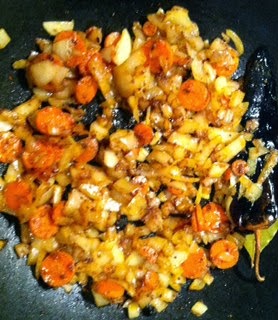
Heat the olive oil in a skillet over medium heat. Cook the
carrots and onion in the hot oil about 5 minutes. Stir in the salt, pepper,
cumin, turmeric, and cabbage and cook another 15 to 20 minutes. Add the
potatoes; cover. Reduce heat to medium-low and cook until potatoes are soft, 20
to 30 minutes.
Friday, December 6, 2013
Subscribe to:
Posts (Atom)